The Vacoute Google Slides Template: A Workflow Engine for Modern Professionals
In the digital age, presentation design is not a standalone task; it is a critical node in a broader workflow of communication, persuasion, and project management. For professionals across industries, the time spent crafting slides is often a bottleneck, pulling resources from core creative or strategic work. This is where a specialized tool like the Google Slides - Vacoute template becomes not just a design asset, but a process accelerator. It is a comprehensive presentation system designed to integrate seamlessly into the planning and execution phases of diverse projects, from client pitches to internal reports and personal portfolios.
Where Vacoute Fits in Your Professional Process
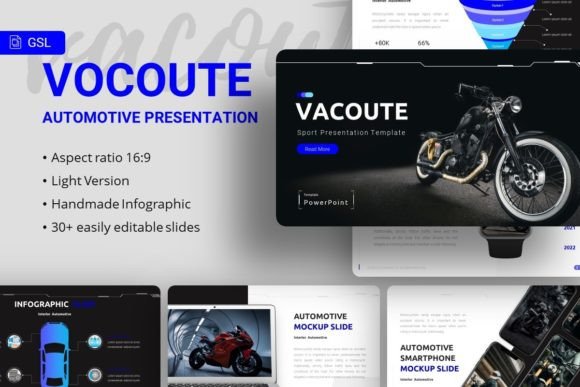
Understanding a tool’s role begins with mapping it to your workflow stages. The Vacoute template is engineered for the preparation and execution phase of presentation creation. Before a project begins, selecting Vacoute sets a foundation of visual consistency and structural clarity. Its 35-slide framework for each template acts as a pre-organized outline, forcing you to consider what information you need to present and in what sequence. This pre-planning eliminates the blank-canvas paralysis and scaffolds your narrative from the start.
During the creative execution, the template’s features directly interact with your content creation tools and methods. The easy customizable contents and handcrafted infographics are not mere decorations; they are editable components that you adapt using data from spreadsheets, insights from analytics platforms, or concepts from team brainstorming sessions. The pixel-perfect illustrations and resizable graphics ensure that the visual output maintains quality, a key factor in professional credibility and audience engagement.
Integration with Content Sources and Teams
A practical workflow often involves multiple resources and collaborators. Vacoute is designed for this reality. The picture placeholder feature, supporting drag-and-drop functionality, means you can directly pull images from your approved libraries—whether from stock sources like Unsplash, Pixabay, and Pexels (as referenced in its assets), or from your company’s own digital asset management system. This seamless interaction reduces friction between content sourcing and slide assembly.
For team-based projects, the fact that the template is based on master slides in PowerPoint format (provided as a .PPTX file) is crucial for consistency and quality control. When a marketing lead, a designer, and a product manager all need to contribute to a deck, using a master slide system ensures that color schemes, font styles, and layout principles remain uniform. This prevents visual fragmentation and saves significant time in the final review and consolidation stage.
Practical Implementation Across Use Cases
The advertised versatility—for Creative Agency, Company Profile, Portfolio, Startup Pitch Deck, and more—is not just a feature list; it’s a directive for how to implement the template. Your implementation strategy changes based on the project goal.
For Startup Pitch Decks and Investor Meetings
Here, the workflow is high-stakes and sequential. You might start with the business model infographic slides to frame your value proposition, then use the customizable content slides to detail your market analysis (integrating data from your research tools), followed by the team profile slides to introduce key personnel. The preparation involves populating these pre-structured slides with your meticulously prepared content. The long-term benefit is efficiency; as you iterate on the pitch, the consistent template allows you to update information without redesigning the entire deck’s visual language, ensuring all versions remain professionally cohesive.
For Creative Agency and Portfolio Presentations
In this context, the presentation is often a culmination of a creative process. After completing client projects or personal work, the portfolio assembly phase begins. Vacoute’s clean, image-focused layouts provide a gallery-style framework. The workflow involves dragging and dropping your final project images into the picture placeholders, then using the accompanying text areas to succinctly describe the project brief, your process, and the outcomes. This turns a scattered collection of work samples into a structured, professional narrative that can be presented to potential clients or used on your personal website.
Factors for Smooth Integration into Your Routine
To adopt any tool effectively, you must consider factors beyond its features. For Vacoute, key considerations are compatibility, usability, and organization.
Compatibility: The template is delivered as a PowerPoint .PPTX file, which works directly within Google Slides. This means it integrates with the cloud-based collaboration ecosystem many professionals already use. You can import the template, share the deck with team members for real-time editing, and present from any device, linking it seamlessly with your existing Google Workspace workflow for documents and spreadsheets.
Usability and Learning Curve: The included documentation file is a critical resource for implementation. Before diving in, a practical step is to review this guide to understand the master slide structure and how to edit the infographics. This upfront preparation minimizes trial-and-error during the actual slide creation phase. The specified fonts, Roboto and Ubuntu, are widely available and web-safe, ensuring that if you export the presentation to other formats or embed it online, typographic consistency is maintained.
Ensuring Quality Control and Long-Term Value
A professional workflow demands quality control. Vacoute’s design principles assist here. The pixel-perfect assets ensure that graphics do not appear blurry when scaled, a common issue in rushed presentations. By using the template as a standard for all company or personal presentations, you build a library of decks that share a visual identity. This has long-term organizational value: it creates a recognizable brand aesthetic for your communications and makes archival and retrieval of past presentations more straightforward, as they follow a predictable format.
Workflow Examples and Observations
Consider a marketing manager preparing a quarterly report. Their process might be: 1) Aggregate data from analytics platforms (Google Analytics, CRM software). 2) Draft key takeaways in a document. 3) Open the Vacoute template and select the relevant data visualization infographic slides. 4) Customize the charts with the aggregated numbers. 5) Use the text-based slides to insert the drafted narrative. 6) Share the deck with leadership for pre-review via Google Slides’ sharing features. The template’s structure guides the manager to present data and narrative in a balanced, visually compelling way, elevating a routine report.
An observation from such use is that the template’s strength lies in its structured flexibility. It provides a scaffold but does not lock you into a rigid sequence. You can remove slides, reorder sections, and deeply customize content, making it adaptable to the unique flow of your specific project. This balance is key for practical implementation—it provides efficiency without sacrificing creative or strategic autonomy.
Final Note on Asset Management
A crucial, practical tip revolves around the note that demo images are for preview only. This means your implementation workflow must include a step for sourcing or preparing your own high-quality images. Integrating this step—perhaps by creating a standard practice of sourcing images from the recommended free sites or your own photo library before slide design begins—ensures the final presentation is truly personalized and professional, moving beyond a generic template look.
Ultimately, Google Slides - Vacoute is more than a set of pretty slides. When viewed through a workflow lens, it is a ready-made system for presentation production. It interacts with your content, your team, and your broader toolset to streamline the process from concept to delivered deck. By understanding its role in preparation, its features during execution, and its benefits for consistency, you can integrate it smoothly to save time, maintain quality, and communicate more effectively across all your professional endeavors.