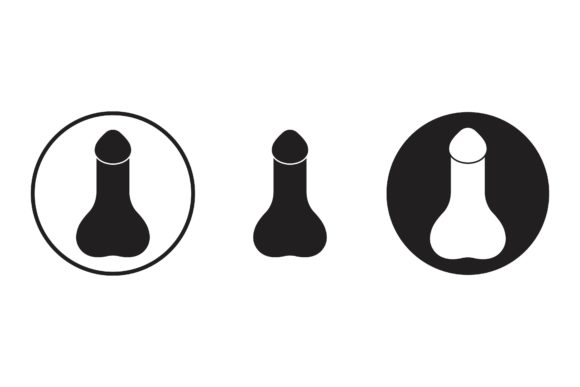
Understanding Reproductive Organs Men Care Logo: Purpose and Design in Medical Communication
When seeking health education materials or professional medical symbols, the clarity and specificity of visual aids are paramount. The term Reproductive Organs Men Care Logo typically refers to a specialized graphic emblem or set of icons designed to represent male reproductive health within a medical or healthcare context. It is not a singular, universally standardized logo but rather a category of design work. This logo concept serves as a visual anchor for organizations, campaigns, educational platforms, or healthcare providers focusing on men’s reproductive wellness, ranging from fertility clinics to public health initiatives.
What distinguishes a Reproductive Organs Men Care Logo from general anatomical illustrations is its intentional fusion of design principles with medical accuracy. While a standard scientific diagram of the male reproductive system aims for pure anatomical detail, this logo variant balances that precision with symbolic communication. It often simplifies complex structures like the testes, prostate, and vas deferens into cleaner, more iconic forms that are easily recognizable, even at smaller scales or on digital platforms. The design must maintain scientific integrity while functioning as a brand identifier, which is a unique challenge compared to purely educational vector art.
Comparing Design Approaches in Medical Symbolism
In the broader landscape of medical and biological iconography, several styles coexist. Understanding where the Reproductive Organs Men Care Logo fits requires examining these common approaches. One prevalent style is the detailed anatomical outline, often used in textbooks or hospital infographics. These illustrations prioritize a comprehensive view, showing relationships to nearby organs like the bladder, intestines, and muscles. They are excellent for deep education but can be too complex for a logo requiring immediate recognition.
Another common category is the abstract pictogram or health sign. Think of a simple heart symbol for cardiology or a stylized lung for respiratory care. These are highly effective for universal signage but may lack the specific detail needed to convey the nuanced focus on reproductive organs. The Reproductive Organs Men Care Logo often occupies a middle ground. It might incorporate an outline of key reproductive structures—isolated from the full digestive or urinary system—but rendered with a consistent line weight, perhaps within a circular badge or alongside a typographic element. This makes it distinct from a generic set of human organ icons.
The decision between a more illustrative logo and a purely abstract one involves tradeoffs. A detailed logo immediately communicates the specialized medical field, fostering trust through demonstrated knowledge. However, it might lose versatility, becoming less effective when printed small or used on a dark background. An abstract symbol offers greater flexibility and modern aesthetics but could require additional context (like text) to ensure accurate interpretation. The strengths of a well-executed Reproductive Organs Men Care Logo lie in its ability to navigate this balance, providing enough detail to be authoritative while remaining clean enough for consistent brand application.
Key Considerations for Selecting or Using This Logo Style
If you are evaluating the use of a Reproductive Organs Men Care Logo for a project, organization, or educational resource, several practical factors come into play. The primary consideration is the target audience and context. Is the logo intended for a hospital department's signage, a website for patient education, a research institute's literature, or a public awareness campaign about diseases like prostate or testicular cancer? Each scenario demands a slightly different emphasis.
For direct patient care settings—such a clinic specializing in male fertility—a logo that clearly and accurately depicts the relevant anatomy can reinforce professionalism and comfort patients by visually confirming the clinic's focus. In this case, a design leaning towards the anatomical side, perhaps showing the reproductive organs in a healthy state, could be most appropriate. Conversely, for a broader men's health advocacy group covering reproductive health alongside other issues like liver health or cardiovascular care, a more integrated symbol might be needed. Perhaps the reproductive icon is part of a larger biological set, representing the whole internal system, which changes the design priority.
The medium is another crucial decision factor. A logo destined for digital use on websites and mobile apps can handle slightly more detail and perhaps even interactive elements. A version needed for embroidered uniforms, printed pamphlets, or small-scale social media avatars necessitates a stronger, simplified outline that remains legible. This is where the vector format intrinsic to such logos becomes a significant advantage. Vector graphics scale perfectly without loss of quality, making a Reproductive Organs Men Care Logo adaptable across physical and digital media, a key benefit over static raster images.
When a Reproductive Organs Men Care Logo is the Right Fit
This specific logo approach is often the right choice when the core mission is directly and exclusively tied to male reproductive health. It signals specialization. For example, a nonprofit funding research into reproductive cancers, a medical practice offering vasectomy services, or an educational platform teaching male physiology would benefit from a logo that visually underscores that focus. The logo acts as an immediate filter, helping the right audience—men seeking specific care or information—identify the resource quickly amidst a sea of general health content.
It also fits situations where educational clarity is paramount alongside branding. A university biology department creating an online module on human reproduction might use a derivative of such a logo as a module icon, assuring students of the content's scientific rigor. In these use cases, the logo’s blend of design and medical accuracy serves both functional and symbolic roles.
When Alternative Visual Approaches Might Be Necessary
Despite its utility, a Reproductive Organs Men Care Logo may not be the optimal solution in certain contexts. If the scope of work extends significantly beyond reproduction, a more holistic symbol might be preferable. Consider a comprehensive men's health clinic addressing reproductive issues, digestive health, mental wellness, and cancer screenings. A logo featuring only the reproductive system could misrepresent the services, potentially alienating patients seeking care for stomach, pancreas, or lung concerns. Here, a broader symbol—perhaps an abstract human figure or a badge representing overall vitality—would be more inclusive.
Similarly, if the primary goal is to communicate a message of prevention or screening for a specific disease, like prostate cancer, a campaign might opt for a different visual strategy altogether. They might use a powerful, minimalist pictogram (like a shield or checkmark) combined with text stating "Prostrate Health," rather than an anatomical logo. This approach can feel more action-oriented and less clinical, which might resonate better for community outreach aimed at encouraging testing.
Furthermore, in highly international or multicultural settings, the interpretation of anatomical icons can vary. A very explicit reproductive organs logo might be perceived differently across cultures. In such cases, a more neutral, text-based logo or a universally recognized medical symbol (like a caduceus or a simple medical cross) paired with explanatory text might be a safer and more effective choice, avoiding unintended misunderstandings.
Evaluating Quality and Effectiveness in Design Execution
Not all logos under the umbrella term Reproductive Organs Men Care Logo are created equal. When comparing options or commissioning a design, look for hallmarks of quality that align with both medical accuracy and design excellence. A proficient design should be based on correct anatomical relationships. The relative position of organs, their basic structure, and their connection to non-reproductive but adjacent systems (like the bladder) should be factually sound, even if simplified. An inaccurate logo can undermine credibility.
From a design perspective, evaluate its versatility. A good vector logo should work in color, monochrome, and outline-only versions. It should be legible against various backgrounds, not just isolated on white. Check how it appears when scaled down to favicon size (16x16 pixels) – can you still discern its core concept? Also, assess its aesthetic harmony with typography if it will include the organization's name. The logo should feel integrated, not like a scientific diagram awkwardly placed next to text.
Finally, consider originality. While the subject matter is defined, the creative execution can vary widely. Some designs might use a clean, linear outline, others a more filled, solid silhouette, and others might integrate a subtle metaphor (like a seed or growth motif) alongside the anatomy. The best fit depends on the brand's personality: is it strictly clinical, warmly supportive, or innovatively educational? Comparing these subtle differences helps select a logo that truly represents the unique voice of the care provider or resource.
In summary, the concept of a Reproductive Organs Men Care Logo represents a specialized tool in health communication. Its value lies in its dual capacity to inform and identify. By understanding its distinct position compared to other medical icons, and by carefully weighing the tradeoffs between detail and abstraction, specificity and inclusivity, organizations can make an informed decision. Whether this logo style is the perfect choice or whether a broader, alternative visual approach is needed depends fundamentally on the precise message you need to convey and the audience you aim to serve. A thoughtful evaluation of these factors will lead to a more effective and resonant visual identity in the important field of men's health and medicine.