Using Visual Tools to Communicate Healing: The Coping with PTSD Concept Icons Bundle
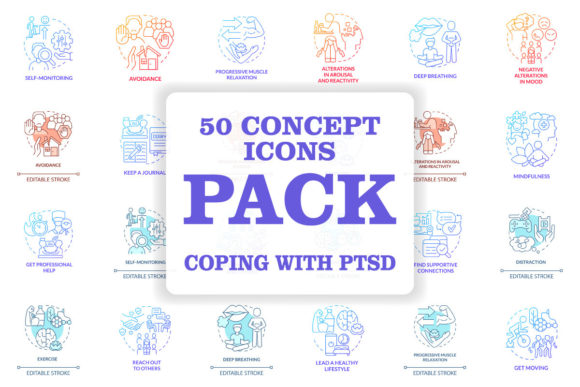
In the world of mental health communication, clarity and empathy are paramount. Whether you're creating educational materials, developing an app, or simply trying to articulate a complex journey, having the right visual language can make all the difference. The Coping with PTSD Concept Icons Bundle is precisely that: a curated collection of thin line color illustrations designed to represent key aspects of post-traumatic stress disorder and the pathways to recovery. It transforms abstract concepts like grounding techniques, therapy sessions, and self-care into clean, understandable symbols.
Where Visual Symbols Bridge Understanding
Think about the last time you tried to explain a mental health process to someone. Words can feel overwhelming or insufficient. A simple icon representing a "safe space" or a "breathing exercise" can instantly create a point of connection. This bundle isn't just graphic design; it's a toolkit for communication. For a therapist designing handouts for clients, these icons can provide visual anchors in a resource packet, making coping strategies easier to remember and reference. An educator building a module on trauma-informed care can use them to create clear, engaging slides that resonate more deeply than text-heavy presentations.
The technical specifications—EPS, SVG, PNG, JPEG, AI files—mean these icons are ready for virtually any project. The editable stroke allows you to adjust weights to match your existing brand or design aesthetic, while the use of Roboto-Medium and Myriad Pro-Bold fonts in the integrated labels ensures a modern, balanced look. This flexibility is key for real-world use.
Real-World Applications Beyond the Screen
The utility of the Coping with PTSD Concept Icons Bundle extends far beyond digital screens. Consider a nonprofit organization running a community outreach campaign. They might use these icons in printed brochures or infographics to demystify PTSD and promote local support services, making the information accessible to people who might be hesitant to read long paragraphs. A life coach or freelance wellness blogger could incorporate them into social media posts, creating a consistent visual theme that helps followers quickly identify content about coping mechanisms and resilience.
For entrepreneurs developing a mental wellness mobile app, these icons are a foundational design asset. They can be used for app navigation, feature categories, or to illustrate daily check-in prompts. Having a coherent set of symbols saves immense development time and creates a professional, trustworthy user experience. Instead of piecing together disparate graphics from various sources, you have a unified visual language that speaks directly to the app's purpose.
Empowering Personal and Professional Projects
Marketers within healthcare or wellness companies face the challenge of communicating sensitive topics with respect and accuracy. Using generic or overly dramatic imagery can backfire. This icon bundle offers a middle path—professional yet compassionate, clinical yet approachable. It allows for the creation of website banners, email newsletter graphics, or promotional materials for psychotherapy services that feel supportive rather than commercial.
On a more personal level, individuals coping with PTSD themselves, or those supporting a loved one, might use these icons in unexpected ways. A hobbyist creating a personal journal or a visual recovery planner could integrate them to map out their weekly self-care routines. An educator might use them in a classroom setting (with appropriate context) to teach students about emotional regulation and mental health resources. The isolation of each symbol means they can be placed anywhere, on any background, without losing their meaning or impact.
What to Consider Before Using a Specialist Icon Set
Before integrating the Coping with PTSD Concept Icons Bundle into your project, it’s worth pausing to align the visuals with your intent. The first consideration is tone. These icons are designed with a concept-oriented, thin-line style—they are illustrative rather than photographic. This makes them excellent for explanatory, educational, or supportive materials, but perhaps less suitable for materials aiming for a raw, documentary feel.
Secondly, think about audience familiarity. While the icons are clear, introducing them in a context where symbols are explained—like a legend in an infographic or a caption in a social post—can maximize their effectiveness. Don’t assume every viewer will immediately interpret "two hands holding" as mutual support or a specific leaf icon as nature therapy; a little contextual guidance helps bridge the gap.
Finally, consider scalability. The bundle includes multiple file formats, which is a direct answer to real workflow needs. The vector formats (EPS, SVG, AI) are essential if you plan to scale icons for large print formats like posters or billboards, or if you need to edit colors for brand matching. The raster formats (PNG, JPEG) are perfect for quick digital use on websites or in presentations. Choosing the right format from the start prevents quality loss and frustrating rework later.
Connecting Features to Tangible Outcomes
The "editable stroke" feature isn't just a technical bullet point. It means you can make these icons seamlessly fit into your existing annual report for a mental health charity, thickening the lines to match your bold corporate typography, or thinning them for a delicate, mindful journal design. The "isolated symbols" quality ensures that a blogger can quickly drag and drop a PNG file onto their WordPress post without needing to crop or clean up a background, saving precious time during content creation.
The inclusion of a bundle, rather than single icons, leads to a coherent outcome. When a freelance designer is tasked with creating a suite of materials for a psychotherapy practice's launch—from the website icons to the brochure infographic templates to the appointment reminder screens—they can pull from this single collection. This consistency builds a strong, recognizable brand identity for the service, making it appear more organized and trustworthy to potential clients.
Furthermore, the promise of new topics and discounts every week from BSD Studio speaks to the needs of creators who operate in evolving fields. Mental health communication is not static; new therapies and coping frameworks emerge. Subscribing means your visual toolkit can grow alongside your expertise, allowing you to tackle new projects—like illustrating concepts for complex PTSD or trauma-informed yoga—without starting the asset search from zero each time.
A Practical Resource for Modern Communicators
In essence, the Coping with PTSD Concept Icons Bundle serves as a practical bridge between the profound, often internal experience of trauma recovery and the external need to communicate, educate, and support. It answers a real problem for a wide range of users: the lack of appropriate, respectful, and adaptable visuals for a sensitive topic. For the small business owner launching a wellness blog, the publisher creating a self-help ebook, the educator designing a course module, or the therapist enhancing client resources, it provides a ready-made visual vocabulary.
By focusing on clear concept illustration rather than decorative art, it prioritizes function. This allows you to spend your energy on the message itself—the content, the strategy, the outreach—rather than struggling with visual representation. When you download the bundle, you’re not just getting files; you’re acquiring a tool that can clarify complex ideas, dignify personal struggles, and ultimately, help more people understand the path to coping and healing.