Revolutionizing Sustainability: The Industrial Ecology Onboarding Mobile App
In today's fast-paced business environment, adopting sustainable practices is both a necessity and a challenge. For professionals and organizations embarking on this journey, a clear, guided path is invaluable. This is where the concept of an Industrial Ecology Onboarding Mobile App comes into play. It's not merely a digital tool; it's a structured educational companion designed to demystify complex ecological principles and integrate them into everyday industrial operations.
What is Industrial Ecology, and Why Does It Need an App?
Industrial ecology is a framework that views industrial systems not as isolated entities, but as interconnected parts of a larger ecosystem, much like a natural environment. It focuses on optimizing resource flows, minimizing waste, and creating closed-loop systems where outputs become inputs for other processes. While the theory is powerful, its practical application can be daunting. Traditional training methods—manuals, seminars, or lengthy courses—often fail to provide the continuous, accessible guidance needed for real-world implementation.
The Industrial Ecology Onboarding Mobile App bridges this gap. By transforming core principles into a mobile, interactive experience, it makes learning actionable. Imagine having a step-by-step sustainability mentor right in your pocket, ready to guide you through assessments, audits, and improvement plans at the factory floor, office, or remote site. This app moves theory from the textbook to the touchscreen.
The Core Experience: A Guided Walkthrough
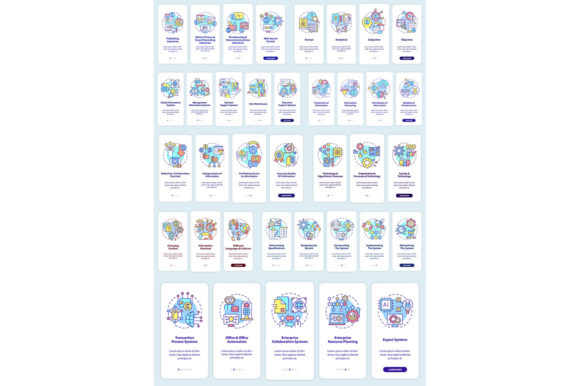
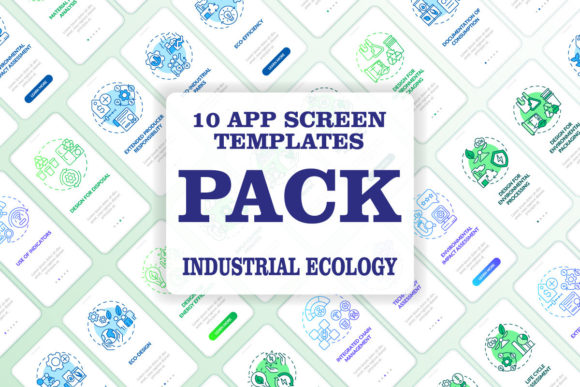
The app's foundational user experience is built around a linear, graphic-driven walkthrough. This isn't a random collection of tips. It's a carefully sequenced journey. Users progress through defined steps, each introduced with clear graphic instructions and concise explanations. This linear concept ensures that foundational knowledge is built before more advanced topics are introduced, preventing overwhelm and building competence gradually.
For instance, the first steps might focus on "Material Flow Mapping," using icons and diagrams to teach users how to chart inputs and outputs in their system. Subsequent steps would then build on this map, introducing concepts like "By-Product Synergy" or "Life Cycle Assessment." Each screen in this Industrial ecology onboarding mobile app screen bundle serves a distinct purpose, creating a cohesive learning narrative.
Design and Functionality: The UI/UX Template
A successful educational tool must be as intuitive as it is informative. The visual design of this app template prioritizes clarity and engagement. Utilizing a font combination like Myriad Pro-Bold for headings and Myriad Pro-Regular for body text establishes a clean, professional, and readable hierarchy. The interface is likely minimalist, directing focus to the instructional content—the graphics, icons, and key takeaways.
The user experience (UX) is linear by design but not rigid. While the core walkthrough provides the primary path, thoughtful UX design would include ways to bookmark steps, review previous concepts, or access a glossary of terms. The graphical user interface (GUI) leverages a consistent template across all screens, ensuring users feel oriented and confident as they navigate. This consistency reduces cognitive load, allowing the user to focus entirely on learning the principles of industrial ecology.
Who Benefits from This Mobile App Solution?
The utility of an Industrial Ecology Onboarding Mobile App extends across a wide spectrum of users:
- Corporate Sustainability Teams: New members can onboard rapidly, and teams can use the app as a reference for ongoing projects.
- Operations Managers and Engineers: Professionals on the ground gain practical knowledge to identify immediate efficiency and waste-reduction opportunities.
- Small Business Owners: Entrepreneurs seeking to green their operations receive a structured, affordable guide without needing to hire consultants initially.
- Educators and Students: The app serves as a dynamic teaching aid or supplementary learning tool for environmental science and industrial engineering courses.
- Consultants and Creators: The provided mobile app screen pages and graphical assets (in formats like EPS, SVG, PNG) offer a valuable template for developers or designers building custom sustainability applications or infographic brochures.
Real-World Applications and Scenarios
Consider a medium-sized manufacturing plant. The management wants to reduce its carbon footprint but isn't sure where to start. Instead of a costly, multi-day workshop, they deploy the Industrial Ecology Onboarding Mobile App to key staff. Over several weeks, employees complete the walkthrough steps during shift overlaps or downtime. The graphic instruction on "Energy Cascade" leads a team to reconfigure their heating system, reusing waste heat from one process to pre-heat materials for another. This tangible outcome stems directly from an app-based lesson.
Another scenario involves a city's waste management department using the app's concepts to redesign its public education campaign. The icons and infographic templates from the screen bundle help them create clearer public brochures explaining circular economy principles to citizens. The app's content provides the expertise; its visual assets provide the communication tools.
Evaluating Its Suitability for Your Needs
While the concept is powerful, it's important to assess if an Industrial Ecology Onboarding Mobile App fits your specific context. Here are key considerations:
- Scope of Learning: The app is ideal for foundational and intermediate concepts. For highly specialized, advanced research, it should be a complement to deeper study.
- Organizational Culture: Success depends on a willingness to adopt mobile learning. It works best in environments that encourage self-paced, digital skill development.
- Integration Potential: Evaluate if the knowledge gained can be directly fed into your existing project management or sustainability reporting systems.
- Customization: For creators, the availability of source file formats (AI, EPS) is a major strength, allowing the template to be adapted for specific industries like textiles, construction, or food processing.
Looking Forward: Continuous Evolution in Sustainability Tools
The field of industrial ecology is dynamic, with new methodologies and best practices emerging regularly. This underscores the value of providers who commit to ongoing development. The promise of new topics and discounts every week for subscribers indicates that such an app ecosystem is not a static product but a growing resource. Subscribing to a service like BSD Studio ensures your knowledge base and design assets remain current, reflecting the latest in sustainable industrial thinking.
In essence, the Industrial Ecology Onboarding Mobile App represents a pragmatic fusion of education, design, and technology. It lowers the barrier to entry for sustainable industrial practices. By providing a linear, visually engaging path through complex ideas, it empowers individuals and organizations to not just learn about industrial ecology, but to begin implementing it. Whether you are a professional seeking practical tools, a business owner aiming for efficiency, or a creator looking for robust design templates, this approach offers a concrete step toward a more sustainable operational future.