The Modern Creative Arsenal: Understanding the Web 3.0 Brochure Template Set
In an era defined by rapid visual communication and digital-first branding, professionals are constantly seeking tools that bridge quality with efficiency. The Web 3.0 Brochure Template Set represents a significant evolution in design resources, moving beyond static templates to become a flexible, multi-format system for contemporary creators. This collection is not merely a bundle of files; it's a curated design toolkit engineered for the workflows of today’s marketers, entrepreneurs, and freelancers.
Beyond the Static Page: What This Template Set Actually Provides
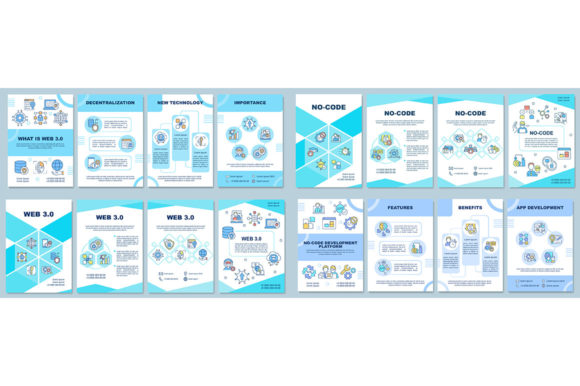
At its core, the Web 3.0 Brochure Template Set is a comprehensive digital product offering vector-based layouts for a variety of print and digital outputs. The key distinction lies in its multi-format foundation. Providing product file formats like EPS, SVG, PNG, JPEG, and AI means that a single design concept can seamlessly adapt from a high-resolution printed booklet to a web-based advertisement or a slide in a presentation deck. This inherent flexibility addresses a major pain point in modern creative work: the need to repurpose core visual assets across multiple channels without sacrificing quality or incurring repetitive design labor.
The design philosophy is clear, utilizing fonts like Arial Black and Myriad Pro Regular for a blend of bold impact and clean readability. The inclusion of linear icons and brochure infographic templates moves the set beyond mere aesthetics into the realm of functional communication. These elements help creators quickly integrate data visualization and symbolic storytelling into their materials, a necessity in fields where explaining complex concepts—like those in technology or Web 3.0 itself—is common.
Alignment with Macro Trends in Creative Work
The relevance of such a template set is magnified by several converging industry trends. First, the democratization of professional design continues. Freelancers, small startups, and in-house marketing teams often operate without the vast resources of large agencies. They require “low-code” or rather “low-effort” design options—pre-structured, high-quality foundations that they can customize and own, not locked subscriptions to complex software. This set provides that low-code option.
Secondly, the expectation for brand consistency across all touchpoints has never been higher. A brand’s annual report must visually resonate with its mobile app screen pages and its event brochures. The vector layouts in this collection, suitable for presentations, annual reports, and ads, ensure a cohesive visual language can be maintained effortlessly. This speaks directly to the changing preferences of clients and audiences who perceive disjointed design as a sign of amateurism or incoherence.
Why Professionals Are Paying Attention
The attention given to resources like the Web 3.0 Brochure Template Set stems from a fundamental shift in workflow economics. Time is the new premium currency. Creators are prioritizing tools that reduce the cycle of iteration from concept to final deliverable. By starting with a professionally crafted vector layout, hours of grid-setting, font pairing, and icon sourcing are eliminated. This allows the creative energy to focus on the message and customization, which is where true competitive differentiation lies.
Furthermore, the “booklet print design” orientation meets a nuanced but persistent need. Despite our digital world, physical, tangible marketing materials—for trade shows, high-end client pitches, or community events—still hold significant power. Having templates optimized for this format, yet born from editable vectors, removes the traditional friction between digital design and print production.
Practical Applications and Observations
Consider a tech entrepreneur preparing for a funding round. They need a pitch deck (presentation), a detailed project booklet for in-depth reviews, and social media ads (PNG/JPEG) to build预热. Using this single template set, they can produce all these materials with a unified aesthetic, leveraging the same linear icons and infographic styles to explain their Web 3.0 project’s tokenomics or user journey. The consistency reinforces professionalism and clarity.
Similarly, a marketing agency tasked with a client’s annual report and a subsequent campaign can use the vector assets to create both the formal report and a series of derivative online graphics. The SVG and EPS formats ensure scalability without quality loss, whether for large-format printing or responsive web use. This practical interconnection between deliverables is a daily reality for modern agencies.
Connecting to Larger Developments
The naming “Web 3.0” here is insightful. It’s not necessarily about blockchain or decentralization in this context, but rather about a next-generation approach to design resources themselves. It mirrors the broader development in technology towards interoperability, user ownership, and modular systems. This template set operates on similar principles: interoperable formats (SVG, AI, EPS), ownership of the editable files (not just output images), and a modular collection of icons, infographics, and layouts. It’s a design system packaged for individual empowerment.
The promise of “new topics and discounts every week” and the encouragement to subscribe on BSD Studio to be updated reflects the contemporary content and service model. It’s not a one-time purchase but an entry into a continuously evolving creative resource ecosystem, aligning with the consumer trend towards ongoing relationships with tool providers rather than isolated transactions.
The Essential Takeaway for Modern Creators
Ultimately, the Web 3.0 Brochure Template Set is more than a product download. It is a response to a market need for streamlined, professional, and adaptable visual communication tools. It fits into the workflow of the professional who must move fast, communicate clearly, and maintain consistency across an ever-growing array of media formats. By providing a foundation of good design in versatile, editable formats, it empowers creators to focus on what matters most: their unique story, their specific data, and their brand’s distinctive voice. In a landscape where visual content is both paramount and expected in multiple forms simultaneously, such a toolkit is not just convenient; it is strategically vital.