Evaluating the Web 3.0 Concept Icons Bundle for Digital Projects
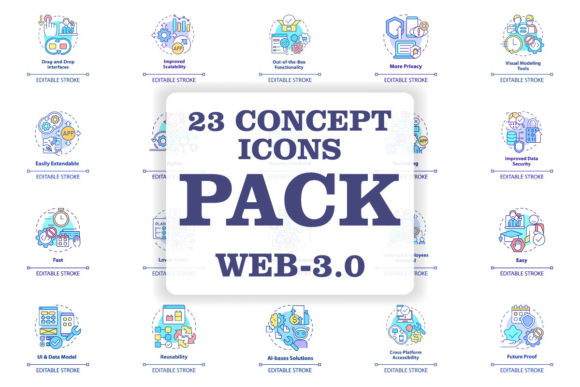
When undertaking a project related to Web 3.0—the decentralized, blockchain-based evolution of the internet—visual communication is paramount. Complex concepts like smart contracts, tokenization, or decentralized finance (DeFi) require clear imagery to aid understanding and user experience. The Web 3.0 Concept Icons Bundle is a digital asset collection designed to address this need. This bundle typically comprises a set of thin line color illustrations and isolated outline drawings representing core Web 3.0 themes, offered in multiple editable file formats like EPS, SVG, PNG, JPEG, and AI. The use of fonts like Roboto-Medium and Myriad Pro-Bold suggests a modern, clean aesthetic. Understanding the composition, applicability, and trade-offs of such a bundle is crucial for designers, developers, and content creators evaluating it for their work.
What This Icon Bundle Provides
A Web 3.0 Concept Icons Bundle is more than a random assortment of graphics. It is a curated visual library aiming to encapsulate the foundational ideas of the next internet era. Each icon is an isolated outline drawing, meaning it is designed without background distractions, making it easy to integrate into various layouts. The editable stroke feature is significant; icons in vector formats (like SVG, EPS, and AI) allow users to modify colors, line weights, and sizes without losing quality, ensuring brand consistency and design flexibility. The bundle's description often highlights its utility for easy software development and no-code solutions, indicating that these icons are intended to simplify the design process for both technical and non-technical creators, serving as ready-made components for interfaces, presentations, and infographics.
Reasons for Interest and Key Benefits
Individuals and teams researching such a bundle are often motivated by specific practical needs. Primary reasons include accelerating project timelines, ensuring visual consistency, and overcoming design skill gaps.
- Time and Resource Efficiency: Creating a coherent set of custom icons from scratch demands considerable design expertise and time. A pre-made bundle offers a substantial shortcut, providing a foundational visual vocabulary that can be deployed immediately or adapted quickly.
- Conceptual Accuracy and Clarity: Well-designed icons distill complex topics into intuitive symbols. A quality bundle will accurately represent Web 3.0 concepts (e.g., wallets, nodes, mining, NFTs), aiding in user education and interface usability.
- Versatility Across Media: The inclusion of multiple file formats is a major benefit. SVG and EPS files are scalable for web and print; PNG and JPEG are ready for immediate use in digital screens; AI files offer deep editing potential for Adobe Illustrator users. This makes the bundle suitable for brochure infographic templates, mobile app screen pages, websites, and pitch decks.
- Support for Low-Code Environments: The emphasis on "no-code solutions" aligns with the growth of visual development platforms. These icons can be easily dragged and dropped into many no-code builders to create prototypes or full applications without writing code, democratizing the creation of Web 3.0-related projects.
Trade-offs and Important Considerations
While the benefits are clear, a balanced evaluation requires acknowledging potential limitations and considerations.
- Originality and Brand Differentiation: Using a publicly available bundle risks a generic visual identity if not customized extensively. If unique brand recognition is a top priority, heavily editing the icons or supplementing them with custom designs is necessary.
- Bundle Scope and Completeness: Not all bundles cover the same range of concepts. Assess whether the specific icons included (e.g., are there icons for "oracles," "staking," or "interoperability") match your project's scope. A bundle might need augmentation for niche topics.
- Technical Compatibility: While multiple formats are offered, confirm they work with your primary software. For instance, AI files require Adobe Illustrator; if your team uses alternative vector tools, the SVG format's compatibility should be verified.
- Style Consistency with Existing Assets: The thin line color illustration style must harmonize with your existing design system. Evaluate the line weight, color palette, and overall aesthetic against your current brand guidelines.
- License and Usage Terms: Always scrutinize the license associated with the bundle. Understand if it permits commercial use, redistribution, or requires attribution. This is a critical legal and ethical consideration.
Situations Where This Bundle Is a Strong Fit
The Web 3.0 Concept Icons Bundle can be an excellent solution in several specific scenarios.
- Rapid Prototyping and MVP Development: For startups or teams building a minimum viable product (MVP) for a Web 3.0 application, speed is essential. This bundle allows quick interface mockups and functional prototypes to test concepts and gather user feedback.
- Educational and Content Creation Projects: Creators developing explainer videos, blog posts, online courses, or infographics about blockchain and decentralization can use these icons to visualize abstract ideas effectively, enhancing audience comprehension.
- Internal Presentations and Pitch Materials: When seeking funding or explaining a project internally to stakeholders, professional visuals matter. A coherent icon set can make presentations more persuasive and understandable.
- Projects with Limited Design Budget: For solo entrepreneurs, small startups, or non-design-focused teams, purchasing a curated bundle is often more cost-effective than hiring a designer for a full custom icon set, especially at early stages.
When Alternatives Might Be Worth Considering
Despite its utility, there are contexts where alternative approaches may better serve your goals.
- Established Brands with Strong Design Systems: Large companies with mature, distinctive visual identities likely require custom iconography that perfectly aligns with their brand. An off-the-shelf bundle may only serve as temporary inspiration.
- Projects Requiring Highly Niche or Novel Imagery: If your work focuses on a cutting-edge, underserved aspect of Web 3.0 not covered in generic bundles (like specific Layer 2 solutions or novel consensus mechanisms), commissioning custom icons or illustration might be unavoidable.
- Long-Term, Scalable Product Development: For a product intended to scale over many years, investing in a foundational, fully custom icon system from the start could prevent future redesign costs and ensure a truly unique user experience.
- Access to In-House or Contracted Design Talent: Organizations with ready access to skilled designers might find it more efficient and cohesive to have icons created as part of a holistic design process, integrated seamlessly with other components.
Practical Decision-Making Insights
To determine if a Web 3.0 Concept Icons Bundle aligns with your needs, conduct a pragmatic assessment. First, audit your current project's requirements: list the exact concepts needing visualization, your timeline, budget, and available design resources. Second, compare the specific bundle's content against your concept list; previews or listings should show the exact icons included. Third, evaluate the technical fit: ensure your team can use the provided formats effectively. Fourth, consider the long-term: if this project is a one-off presentation, a bundle is likely perfect. If it's the start of a flagship product, think about how these icons will evolve. Finally, always verify the license to avoid future restrictions.
Resources like the mentioned BSD Studio, which creates icons and templates and offers new topics and discounts weekly, exemplify platforms where such bundles are available. Subscribing to similar studios can keep you updated on new assets, but the decision to use any bundle should stem from a clear match to your project's functional and aesthetic demands, not merely from availability. By focusing on the bundle's role as a tool for efficiency and clarity, rather than as a definitive brand solution, you can make an objective choice that genuinely aids your Web 3.0 project's development and communication.